08 October 2026
Spring, TX Busy Professionals Choose adult martial arts training Condition 1 Combat Center
Presented by @gunnermjku438
Drive west on Louetta or Kuykendahl after 5 p.m. And you will notice the pattern. Laptops close, traffic thickens, and a steady trickle of cars turns into the lot at Condition 1 Combat Center. Inside, an evening class is warming up, the thud of pads and the buzz of focused conversation setting a cadence that has very little to do with spreadsheets, emails, or deadlines. Many of the faces in that room belong to managers, engineers, nurses, entrepreneurs, and IT pros who spend most of the day in chairs and on calls. They do not come to escape work. They come to sharpen what work demands: composure under pressure, clear thinking, and the energy to show up every day with purpose.
I have trained and coached busy professionals across Spring, TX and the north Houston corridor long enough to see the pattern up close. Adult martial arts training at Condition 1 Combat Center works for people with careers and families not because it is easy, but because it is intelligently hard. It pushes in the right ways, respects limited time, and builds durable skills that transfer cleanly from mat to office to everyday life.
What professionals actually need from training
Most adults do not need a fight camp. They need an anchor. Something consistent, structured, and challenging enough to make a visible difference without wrecking the next morning’s meeting. The sweet spot combines three elements.
First, training must be efficient. Sessions should deliver conditioning, technical learning, and stress relief in 60 to 75 minutes. That means thoughtful sequencing, not random circuits. You warm up with mobility and activation, move into technical reps, ramp intensity with pad rounds or partner drills, then close with targeted conditioning or controlled live work.
Second, safety and longevity matter. Your training should make you more capable, not more fragile. Good instructors recognize the realities of adult bodies. They demand precision over flair, and they balance contact with recovery. Conditioning that spares the joints and a culture that respects tap early, tap often keeps people training year after year.
Third, learning must feel relevant. Adults stay engaged when they understand the why. When a coach explains how a guard recovery translates into real self defense, or how a stance adjustment protects knees during long workdays, the skill sticks. Relevance cuts through fatigue and raises adherence far better than generic motivation.
Condition 1 Combat Center has built its adult curriculum around those principles. The classes integrate striking, clinch control, grappling fundamentals, and scenario training into a cohesive program that suits a 25-year-old project manager and a 52-year-old sales director in the same room, with scaled intensity for each.
What training looks like at Condition 1
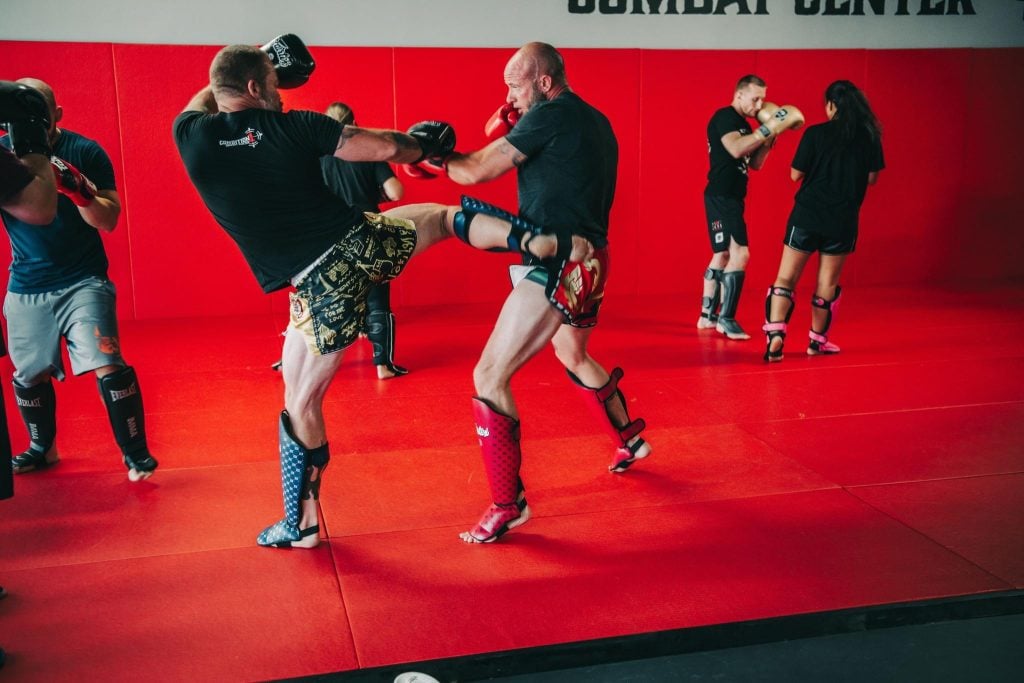
Walk into a typical evening at Condition 1 Combat Center and you will see the rhythm of a well-run room. The warm-up is not a time filler. Mobility flows for hips and thoracic spine, footwork ladders, and light shadow work prime the body specifically for what comes next. In a self defense block, you may see stance and base drills, inside step footwork, and address of the most common stress responses like tunnel vision and breath-holding. Coaches cue nose-breathing on resets and short exhales during exertion, which prevents the head rush many first-timers feel.
Technical sections often alternate between striking combinations on pads and positional control on the mat. The goal is transfer. For example, a class might pair a jab-cross-hook entry with a clinch pummel drill, then finish with a takedown to a dominant position followed by a controlled stand-up. Rather than silo skills, the class connects them. Students log real reps of bridging from distance management into contact, where most confrontations actually end up.
Scenario segments keep things honest. It is one thing to hit a clean sequence on a cooperative target. It is another to apply it when a partner resists or when you have to move around a barrier like a heavy bag or a wall pad. You will also practice verbal boundary setting, posture, and framing against grabs or pushes. Those non-technical layers can make the difference between a moment you walk away from and one that spirals.
The energy in the room is focused, not frantic. Partners switch often, feedback is specific, and coaches step in to adjust details like stance width, elbow position, or hand placement on frames and underhooks. That attention to detail protects people from nagging injuries and accelerates progress for those who can only make it to two or three sessions a week.
If you are browsing condition1combat.com for self defense classes, you will find the throughline: functional training that respects your time. The structure reflects a core belief I share as a coach, the body responds best to clear stimuli delivered consistently. You do not need novelty every week. You need a curriculum with smart progressions that layer complexity only after the basics feel automatic.
Real self defense without theatrics
Self defense training works when it trains probability, not possibility. Most adults are not preparing for knife disarms in a dark alley. They are preparing for the statistically common events: boundary violations, grabs, shoves, haymaker-style punches, and the chaos of a stumble to the ground in tight spaces like parking lots.
At Condition 1, the focus remains on robust fundamentals. Base, posture, and frames that protect the head and spine. Footwork that creates angles instead of retreats in straight lines. A handful of high-percentage strikes that can be performed under fatigue and stress. Clinch competence, because controlling distance often matters more than landing a perfect shot. Ground escapes and get-ups that work when clothing, terrain, and adrenaline complicate everything.
None of this is glamorous. It is practical. It also happens to carry over to daily life. The same bracing mechanics that help you fight off a body lock protect your back when you pick up a sleeping toddler or a box of printer paper. The same breathing cadence that keeps you calm in a late-round pad drill steadies you before a tough phone call.
This is why many adults search for Condition 1 Combat Center martial arts classes long before they consider a generic big-box gym. Results show up where they matter. More confidence in dim parking garages. Quicker recovery after a burst of steps to catch a flight. Fewer aches after a weekend of yard work. Training that respects the realities of adulthood, not a fantasy fight reel.
Why Spring, TX professionals stick with it
Professionals do not quit because they are lazy. They quit when friction stacks up. Commutes, kid schedules, late meetings, and the simple fact that 8 p.m. Sometimes feels like midnight. Programs that work reduce friction, which is why martial arts classes at Condition 1 Combat Center tend to fit real life.
- Location matters. A facility that sits near major arteries like I-45 or FM 2920 trims enough minutes off a drive to turn a maybe into a yes.
- Class windows across early evenings and weekends help those with unpredictable calendars.
- The culture rewards consistent attendance more than heroic efforts. Missed a week on a deadline crunch, you are welcomed back without side-eye.
- Technical scaling maintains shared progress, so a new blue belt and a first-day student can each find the right level of challenge without derailing the other.
- Clear communication and structured curriculums remove uncertainty, which reduces the mental load of getting back on the mat after a hectic day.
Those points look simple on paper. In practice, they keep training sustainable for years, not months.
Strength, conditioning, and measurable progress
People often ask how martial arts compares to traditional fitness. If you are toggling between a treadmill and machines, numbers come easy. Minutes, miles, plates. Martial arts requires a different lens. Here is how professionals in Spring tend to measure progress without obsessing over vanity metrics.
Resting heart rate drops by a few beats after 8 to 12 weeks of steady training, a sign of improved aerobic capacity and recovery. Work capacity in rounds improves, from surviving three 2-minute pad rounds to finishing five while keeping combinations clean. Grip strength, which correlates with overall functional strength and injury resilience, climbs as you handle clinch drills and grappling sequences. Perhaps most useful, the subjective sense of calm during chaos increases. Students report mentally tracking breath and footwork during live rounds rather than blanking out.
Condition 1’s coaches encourage simple logs, just short notes after classes. What felt sharper, what gassed you, what needs attention. Over time, those notes create a map. Busy professionals thrive on feedback loops at work, and training should not be different. If you have been browsing condition1combat.com martial arts or adult classes, you will notice the emphasis on progression. The facility favors a clarity-first approach, not a random workout of the day that leaves you guessing where you stand.
Safety, injury prevention, and the long game
Adults carry mileage. Old ankle sprains from high school sports, desk-induced hip stiffness, shoulders cranky from too many hours mousing. Smart training accounts for that. Here is what it looks like when done right.
Warm-ups emphasize joint preparation rather than just raising body temperature. Think ankle CARs, controlled spine rotations, and hamstring flossing paired with stance work. Drills scale by lever length and intensity, not just reps, so a tall beginner does not torque a knee trying to keep up with a compact veteran on a particular throw. Contact is progressive. First you learn the tool on pads, then you add a feeding partner, then resistance layers in at manageable levels.
Coaches also teach exit strategies. If a round gets too hot, you can downshift, work defense, or grab a coaching cue and reset. That culture keeps egos in check and people healthy. A good sign of a healthy room is quiet confidence and laughter after rounds, not ice packs and limps to the car.
Recovery is baked into the plan. Hydration cues, simple mobility homework for off-days, and encouragement to view sleep as part of training, not an afterthought. This mindset matters for the same reason it does in business, consistency compounds. You do not need to crush every session. You need to keep showing up.
Time management for high-demand schedules
The biggest barrier for professionals is not motivation. It is logistics. Martial arts becomes realistic when you install habits around it.
- Treat sessions like non-movable meetings and block them on your calendar two weeks out.
- Pack your bag the night before, with a spare mouthguard and tape so small snags do not sink the day.
- Pick one early-week class and one late-week class to bracket your work cycle.
- Keep a low-intensity “study day” option, review notes, practice footwork in your driveway, or shadow grapple for 10 minutes.
- Tie training to an existing routine, such as gym days or school pickups, to reduce decision fatigue.
I have watched executives who travel two weeks a month maintain momentum this way. They aim for two solid sessions when home and a short skill rehearsal on the road. Progress, not perfection, is the North Star.
Culture that supports growth
Technique matters, but culture keeps you coming back. Condition 1 Combat Center balances seriousness with approachability. New members are paired with partners who remember their own first class and know how to pace. Advanced students still drill basics with intent. Coaches make time for questions before and after class without rushing to lock the door.
There is also accountability without shame. If someone misses a week, they usually get a quick check-in. Not pressure, just a reminder that they belong on the mat. That small gesture matters for an overextended parent who needs a nudge to reclaim an hour for themselves.
When people search for martial arts classes condition1combat.com or Condition 1 Combat Center martial arts classes, they are often looking for community as much as curriculum. The gym delivers both, with a mix of adult programs and kids options that allow families to share a destination instead of juggling separate activities across town.
Families train here too
Many professionals find it easier to commit when their kids are excited to go as well. Condition 1 Combat Center kids martial arts programs focus on coordination, attention, and respect while introducing age-appropriate self defense. The benefit at home is obvious, a child who get more info learns to listen under pressure, share space, and fail forward tends to navigate school and sports with more poise.
Parents who start with kids classes often find themselves on the mat before long. The reverse happens too. A mom or dad who begins adult martial arts training brings confidence home, and children want to know what those gloves or shin guards are about. If you are exploring kids programs online, you will likely come across condition1combat.com kids martial arts and kids martial arts condition1combat.com, where the emphasis is on safety, fun, and steady growth.
What to expect from your first month
The first session is about learning how the room works. You will sign a waiver, get a quick orientation, and join the warm-up. Coaches will demo techniques slowly, then scale them to your comfort. Expect to sweat, but also expect breaks. You will leave with a clear path for where to focus before the next visit.
By week two, the movement will feel less foreign. Your stance will stabilize, your hands will return to guard without a mental reminder, and you will feel the difference between soft and structured contact. Soreness will migrate from everywhere to specific places, usually hips and lats, as you learn to generate force with better mechanics.
By week four, you will likely complete multiple rounds without checking the clock, and you will start to notice small victories elsewhere. Less stiffness at your desk. Easier sleep on training nights. A calmer response when your day derails.
If you want an extra nudge, look for self defense classes condition1combat.com or condition1combat.com self defense classes. Use the site to request a trial or consultation. The staff will help you map a schedule that honors your work and family commitments.
Private sessions or group classes
Both have merit. Private sessions compress learning. They are useful if you travel often or prefer to polish fundamentals before joining live rounds. Group classes develop adaptability and timing. You will encounter different body types, reactions, and speeds, which builds a broader skill set.
A practical split for busy professionals is one private for every six to eight group classes, especially early on. That cadence cleans up details before they harden into habits, without putting your progress behind a paywall of one-on-one time.
Equipment, hygiene, and small logistics that matter
You do not need much to start. A comfortable pair of training shorts or pants, a breathable top, and a mouthguard will carry you through initial classes. As you continue, you may add hand wraps, gloves, or shin guards for striking, and a rash guard and grappling shorts for groundwork. Keep a small towel and a water bottle in your bag. Label everything. Spares prevent missed rounds because of a torn wrap or a forgotten mouthguard.
Hygiene shows respect for partners. Clip nails, cover any nicks, and bring sandals to wear off the mat. Wipe down gear after class. Small routines like these sustain a clean room where everyone is comfortable training hard.
Cost, value, and how to evaluate programs
Adults do not purchase classes, they purchase outcomes. When you compare options in Spring, look beyond price per session. Evaluate how often you can realistically attend given your commute and family obligations. An unlimited plan is meaningless if you can attend only twice per week. Check whether the curriculum cycles make sense for your level. Ask how the staff supports new members and how they handle injuries or movement limitations.
At Condition 1 Combat Center, the value comes from a coherent adult pathway, community, and consistent coaching. If budget is tight, start with the plan you can sustain and put the difference into quality gear that will last years. Consistency outperforms intensity, and thoughtful instruction outperforms flashy facilities.
The hidden professional benefits
The carryover to work is not abstract. Practitioners often describe two effects. First, a shorter refractory period after stress. Hard meeting at 3 p.m., you feel it, then it passes. Martial arts trains that transition repeatedly. You spike effort in a round, breathe, reset, and move again. Second, clearer boundaries. Self defense begins with saying no early. That skill maps directly to email triage and calendar management. Protecting your time is not selfish. It is strategic.
Teams notice. The colleague who trains tends to raise their hand for uncomfortable tasks, not because they enjoy pain, but because they trust themselves to stay composed and make adjustments. That reputation compounds into leadership opportunities.
How to get started
If you are ready to see whether this fits your life, visit condition1combat.com and look for adult martial arts training Condition 1 Combat Center. You can request a trial, ask about schedule windows that bookend your workday, and outline any prior injuries so the staff can guide your first classes. If you prefer to focus on practical protection first, search for condition1combat.com adult martial arts training or condition1combat.com self defense classes and mention those priorities when you reach out.
If you have a family, explore Condition 1 Combat Center kids martial arts offerings. Training becomes far easier to sustain when your child is excited to head to the same place you are.
The next time you pass the evening traffic and see those cars turning into the lot, remember what is happening inside. People with full calendars are investing in skills that keep their bodies strong, their minds steady, and their days better balanced. Martial arts Condition 1 Combat Center delivers more than a workout. It offers a reliable structure where effort becomes competence and competence becomes confidence, session by session. For busy professionals in Spring, that is not a hobby. It is a strategy that pays dividends across every part of life.